
Introducing the What's New page
 Sergey Pronin
A single feed for everything shipping across OpenEverest — the core, providers, and plugins. Here is why we built the What’s New page and how an AI-powered pipeline keeps it up to date.
The first open-source platform for automated database provisioning and management. It supports multiple database technologies and can be hosted on any Kubernetes infrastructure, in the cloud or on-premises.
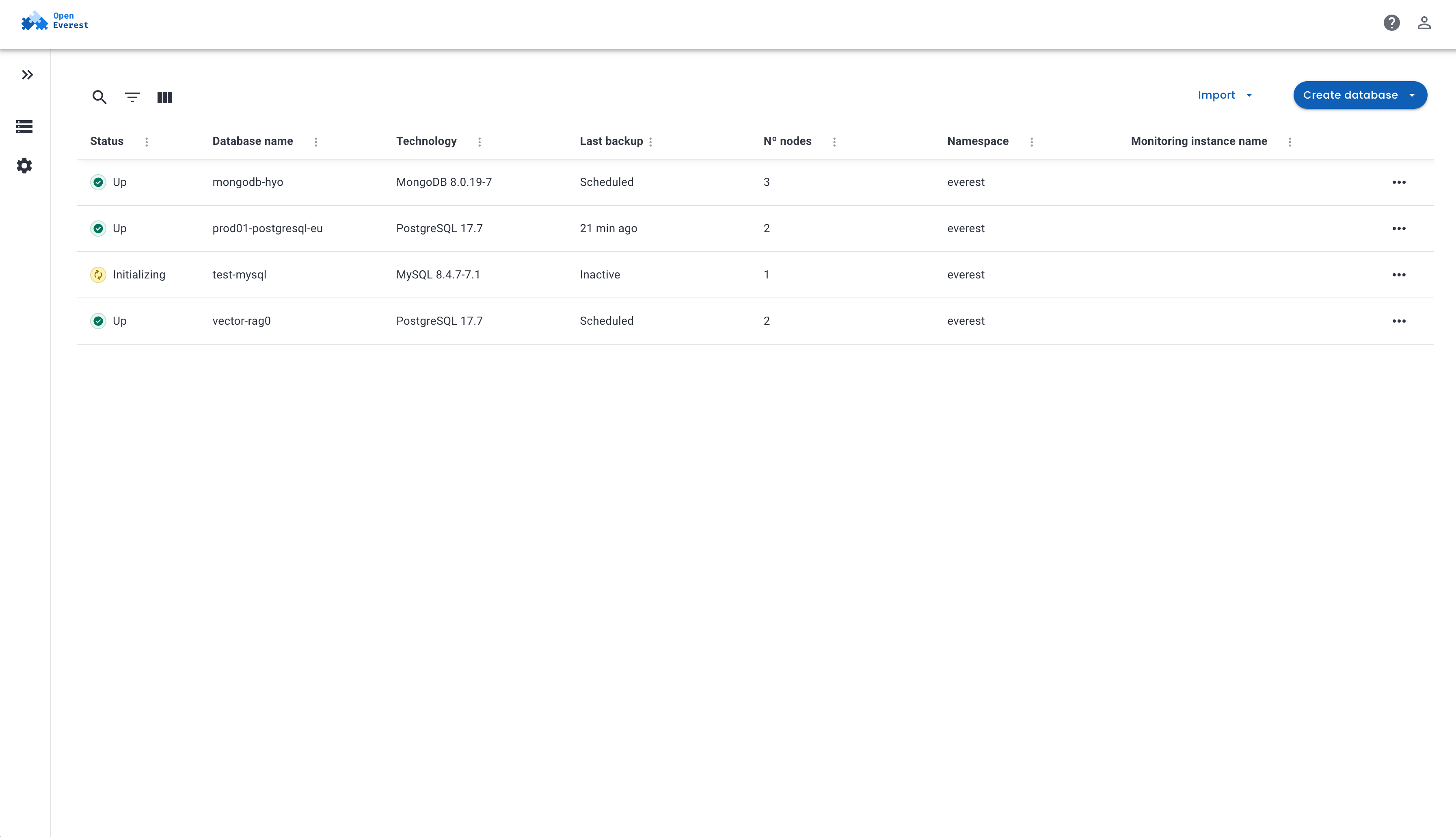
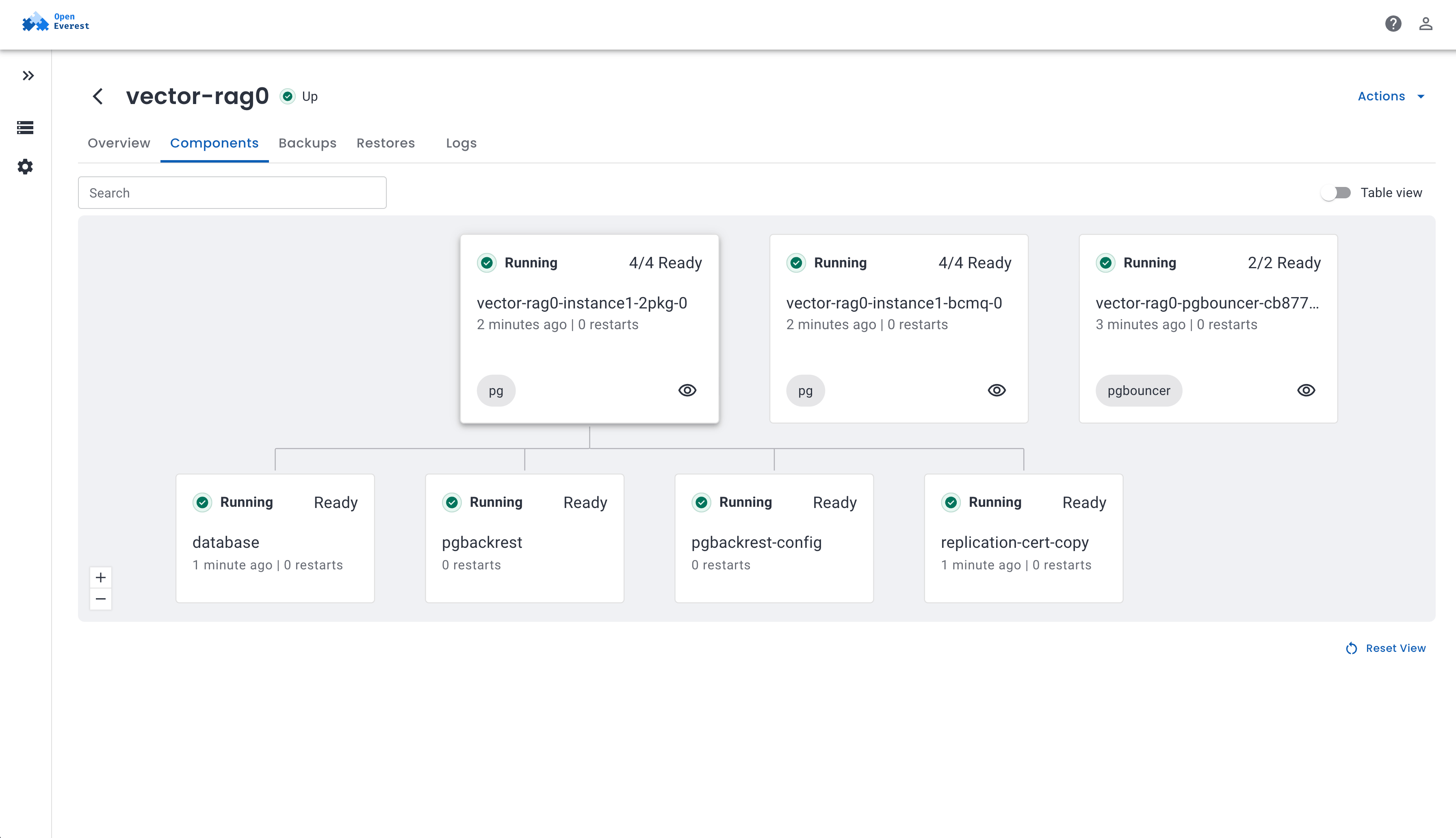
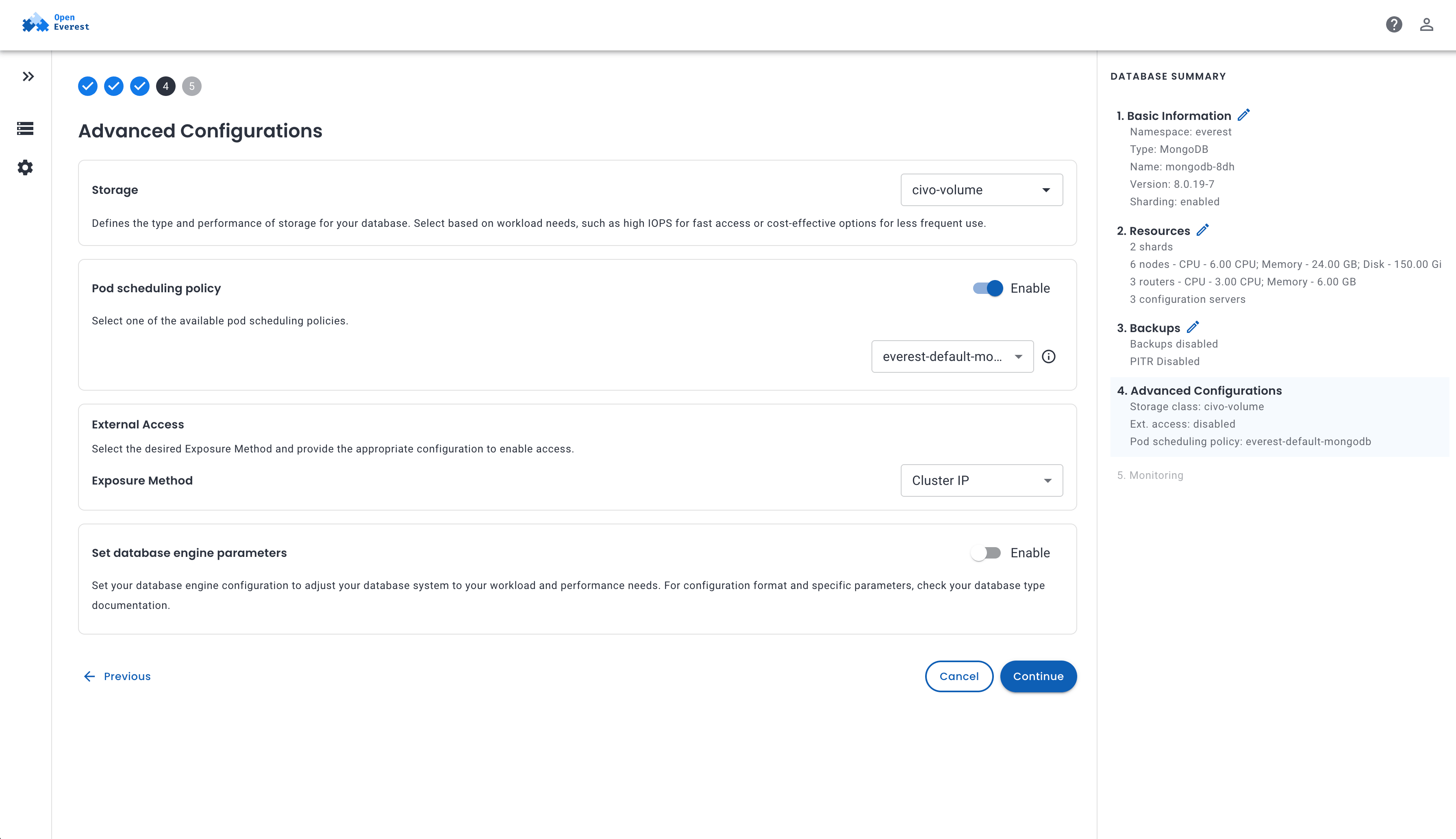
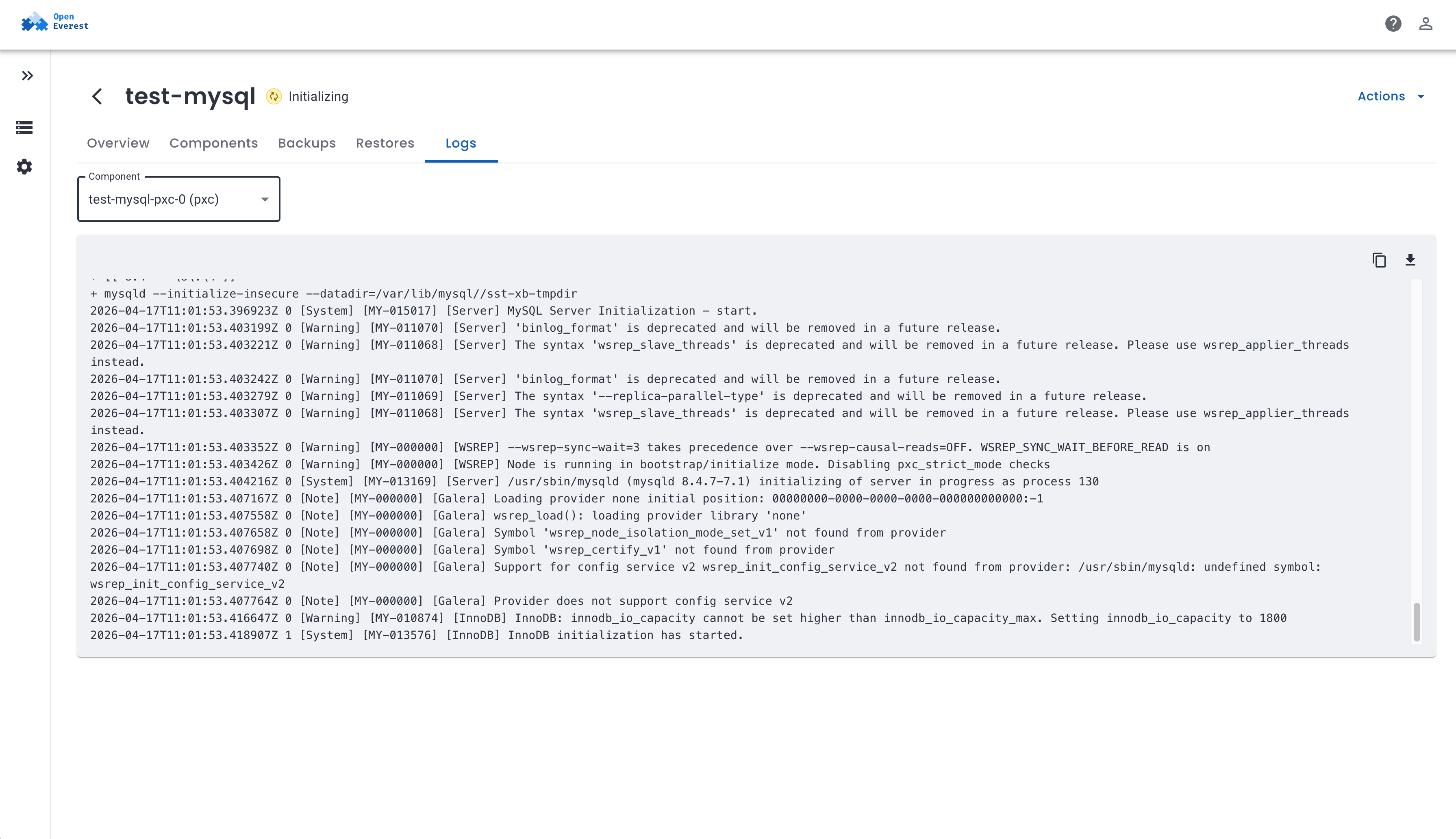
Deploy an automated private DBaaS without being tied to a single cloud provider.
Skip building your own platform. Get a production-ready solution out of the box.
Full transparency, no licensing fees, and community-driven development.
Deploy across multiple cloud providers with support for PostgreSQL, MySQL, MongoDB, and more coming soon.
Learn more →Scale horizontally or vertically with advanced storage management and disaster recovery capabilities.
Learn more →Monitor with PMM for performance metrics, query analysis, and comprehensive cluster insights.
Learn more →Complete control over your database environment with DIY customization and enhanced security.
Fine-grained control with external access management and database engine optimization.
Adjust CPU, memory, and storage allocations on-the-fly to handle changing workloads.
OpenEverest thrives because of its open, collaborative community. Whether you're a developer, operator, or enthusiast — there are many ways to get involved.
OpenEverest is open source and thrives on community contributions. No contribution is too small — whether it's code, documentation, or website improvements.
All projects are Apache 2.0 licensed. We welcome PRs and issues!
New to contributing? Start here! Browse beginner-friendly issues across all OpenEverest repositories.
OpenEverest participates in the Linux Foundation's LFX Mentorship program. Work on real OpenEverest features with experienced maintainers as your guides.
Join our real-time discussions on CNCF Slack. New to CNCF Slack? Grab a workspace invite first, then join our channel.
Found a bug or have an idea? Open an issue or start a discussion.
Join us every two weeks for live updates, demos, and open Q&A with the OpenEverest team and contributors.
Discover where we're heading and help shape the future of database operations on Kubernetes.
OpenEverest aims to become the standard for database operations on Kubernetes, empowering teams to deploy, manage, and scale databases with confidence.
Explore Our VisionSee what we're building next and track our progress. Our roadmap is public and community-driven.
View RoadmapWant to influence where the project is going?
Propose a FeatureA single feed for everything shipping across OpenEverest — the core, providers, and plugins. Here is why we built the What’s New page and how an AI-powered pipeline keeps it up to date.

We wrapped up the OpenEverest Asian tour at KubeCon + CloudNativeCon China in Shanghai — a conference where Kubernetes has effectively become the operating system for AI. Here is what stood out, from the talks to the China-native project landscape to the project pavilion.
Our two LFX Mentorship Term 3 projects now have their mentees. Meet Aditya Pimpalkar (Object Storage provider) and Abdul Moiz (Benchmark plugin), and see what to expect from each.
MariaDB is now available on OpenEverest through a dedicated provider backed by mariadb-operator. Deploy it with the v2 release, pick a standalone, Galera, or replication topology, and get TLS, monitoring, and scaling out of the box.
The first OpenEverest Pulse: a concise roundup of what shipped this month — the 2.0.0-dev.2 release, the Extension Hub on the website, and updates across the MariaDB, Cassandra, and Valkey providers.
Deploying a 3-node PostgreSQL cluster on OpenEverest v2 with provider-percona-postgresql, and putting failover to the real test — killing the primary and timing how fast it recovers.
Find answers to common questions about OpenEverest
kubectl. Or you let OpenEverest do it.OpenEverest is 100% open source and community-driven. All components are available under the Apache 2 license on GitHub.
Originally created by

CNCF Sandbox Project


 Shivansh Sinha