






OpenEverest v2 Developer Preview
OpenEverest v2 Developer Preview is here. A modular architecture with a Provider SDK, Generic Plugins, and a streamlined UX — all designed so developers can integrate new database technologies in days, not months.
The first open-source platform for automated database provisioning and management. It supports multiple database technologies and can be hosted on any Kubernetes infrastructure, in the cloud or on-premises.
Deploy an automated private DBaaS without being tied to a single cloud provider.
Skip building your own platform. Get a production-ready solution out of the box.
Full transparency, no licensing fees, and community-driven development.
Deploy across multiple cloud providers with support for PostgreSQL, MySQL, MongoDB, and more coming soon.
Learn more →Scale horizontally or vertically with advanced storage management and disaster recovery capabilities.
Learn more →Monitor with PMM for performance metrics, query analysis, and comprehensive cluster insights.
Learn more →Complete control over your database environment with DIY customization and enhanced security.
Fine-grained control with external access management and database engine optimization.
Adjust CPU, memory, and storage allocations on-the-fly to handle changing workloads.
OpenEverest thrives because of its open, collaborative community. Whether you're a developer, operator, or enthusiast — there are many ways to get involved.
OpenEverest is open source and thrives on community contributions. No contribution is too small — whether it's code, documentation, or website improvements.
All projects are Apache 2.0 licensed. We welcome PRs and issues!
New to contributing? Start here! Browse beginner-friendly issues across all OpenEverest repositories.
Found a bug or have an idea? Open an issue or start a discussion.
Join us every two weeks for live updates, demos, and open Q&A with the OpenEverest team and contributors.
Discover where we're heading and help shape the future of database operations on Kubernetes.
OpenEverest aims to become the standard for database operations on Kubernetes, empowering teams to deploy, manage, and scale databases with confidence.
Explore Our VisionSee what we're building next and track our progress. Our roadmap is public and community-driven.
View RoadmapWant to influence where the project is going?
Propose a Feature
OpenEverest v2 Developer Preview is here. A modular architecture with a Provider SDK, Generic Plugins, and a streamlined UX — all designed so developers can integrate new database technologies in days, not months.

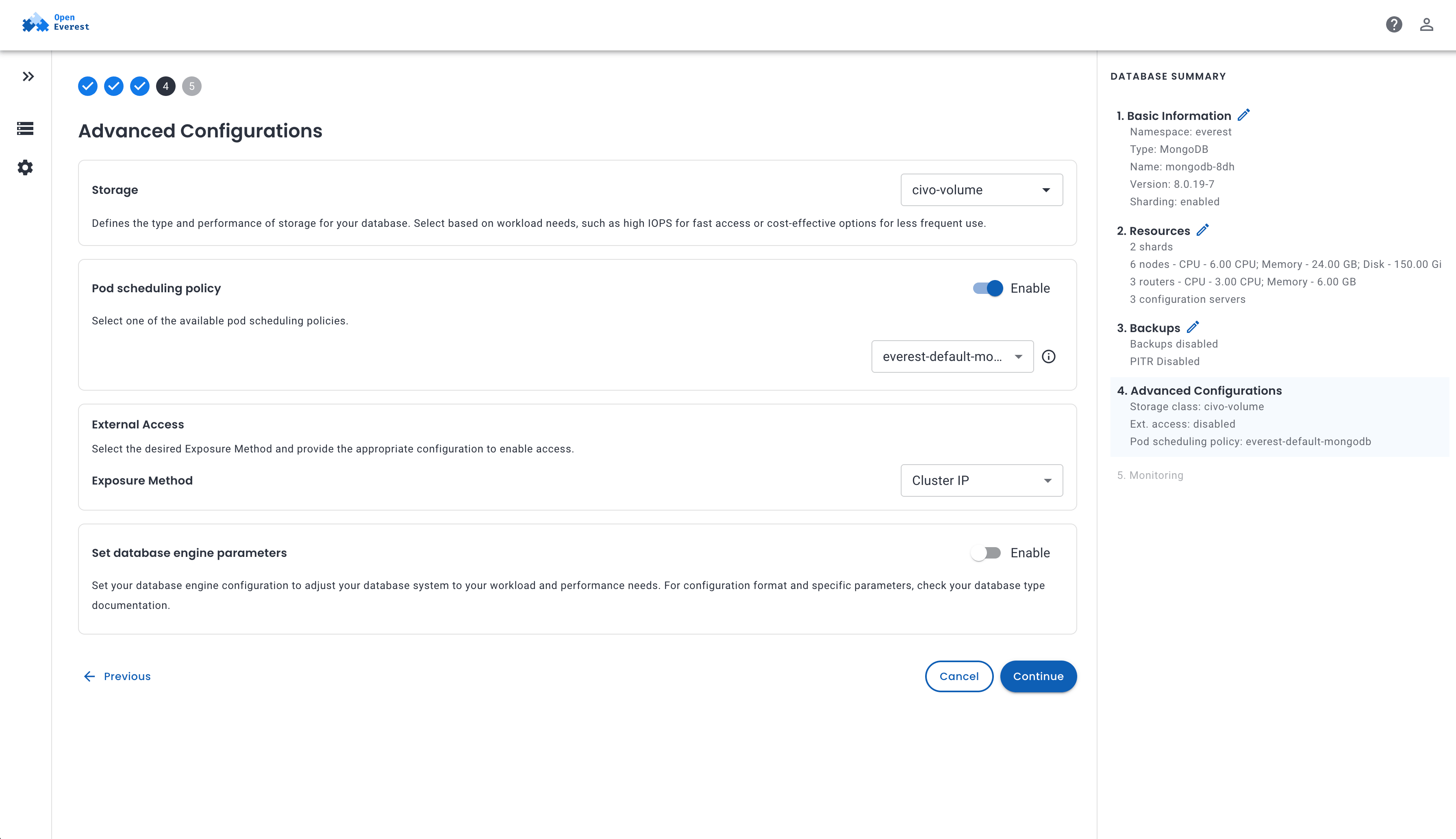
Walk through enabling MongoDB sharding in the OpenEverest UI and verify the config servers, mongos routers, and shard pods created in your namespace.

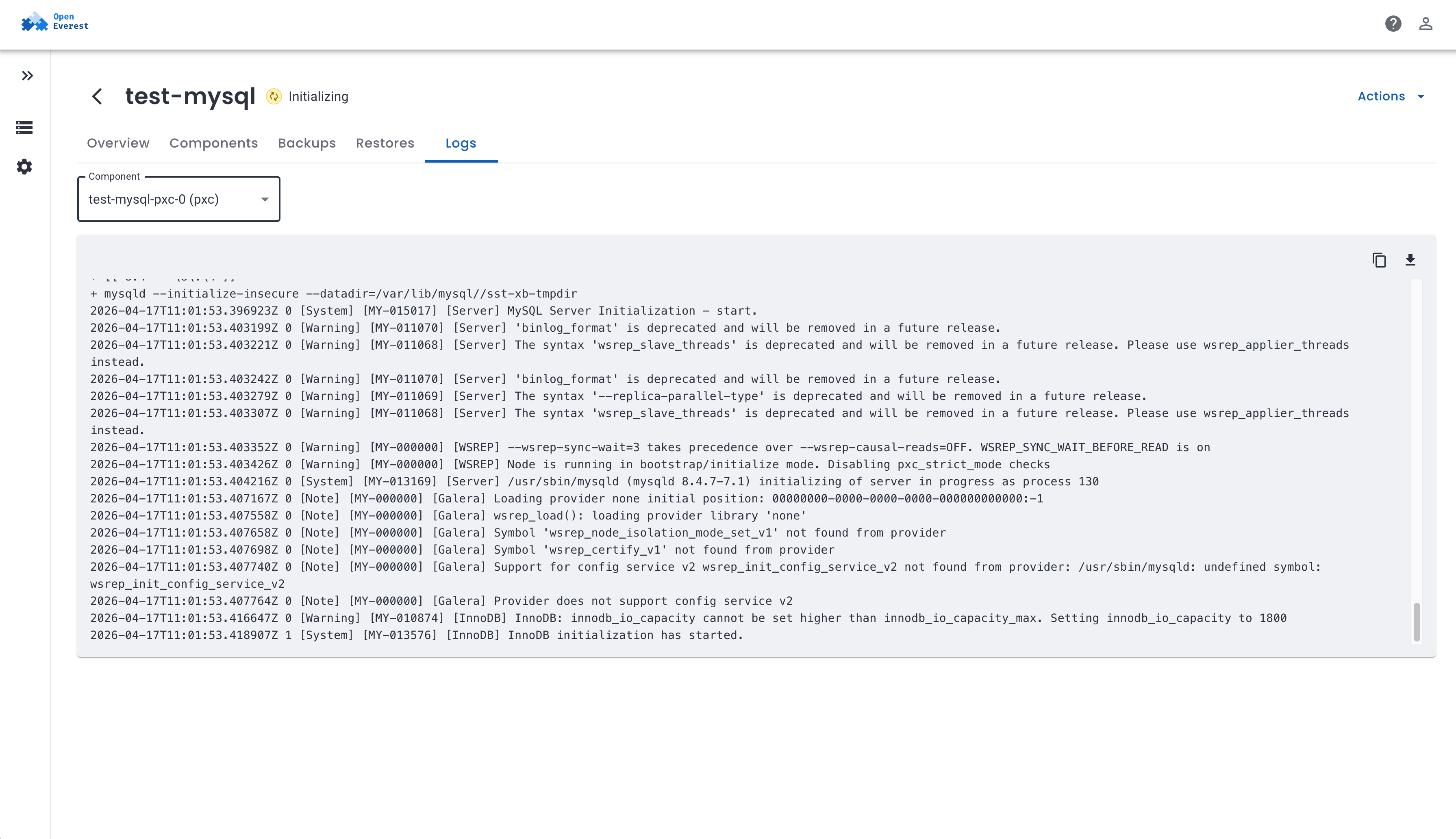
Run OpenEverest locally with kind and everestctl to create and manage PostgreSQL on Kubernetes. A practical step-by-step guide covering setup, database creation, and resource debugging on a laptop.

ProxySQL 3 added PostgreSQL support. Let’s see how hard it is to deploy it in front of a Patroni-managed PostgreSQL cluster on Kubernetes and get read/write splitting working.

OpenEverest just hit 750 stars on GitHub! Since the 500-star milestone, OpenEverest has become the CNCF Sandbox project, and the number of contributors is growing steadily.

A community-maintained playground built to make OpenEverest easier to evaluate, demo, and discuss locally.
Find answers to common questions about OpenEverest
OpenEverest is 100% open source and community-driven. All components are available under the Apache 2 license on GitHub.
Originally created by
CNCF Sandbox Project